
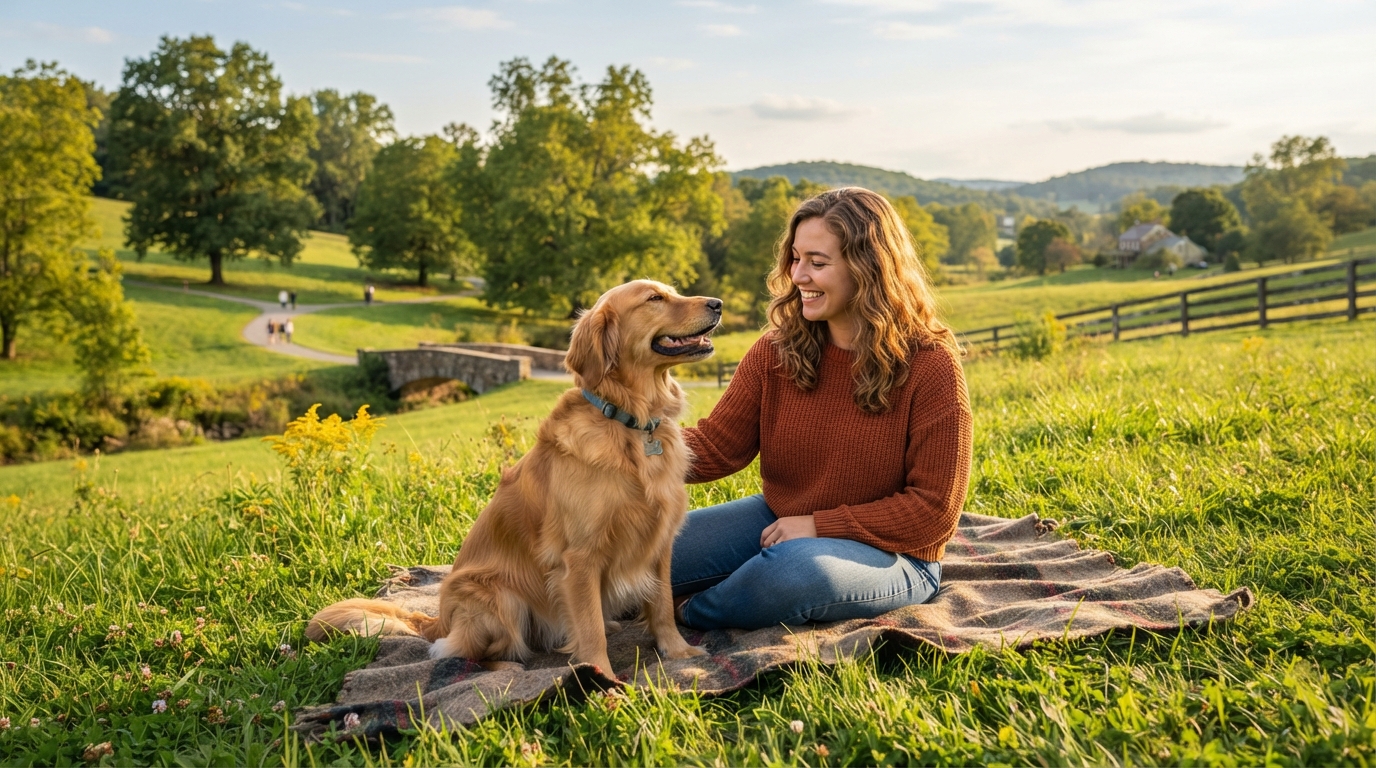
Dogs have an extraordinary ability to make people feel less alone. Their steady presence, familiar routines, and unconditional companionship can bring comfort, connection, and joy into everyday life.
But what exactly is a companion dog, and how is a companion dog different from a service dog or therapy dog?
Understanding those differences is an important first step for individuals and families considering canine companionship.
What Is a Companion Dog?
A companion dog is a dog whose primary role is to provide friendship, comfort, and connection through everyday life with an individual or family.
Unlike a service dog, a companion dog is not necessarily trained to perform a specific disability-related task. The value of a companion dog comes from the relationship itself: sharing routines, offering affection, encouraging engagement, and being a steady presence during both ordinary and difficult moments.
At the Golden Green Foundation, we use the term Golden Canine for the carefully selected companion dogs we plan to match with qualified individuals and families as our program develops.
Companion Dog vs. Service Dog
A companion dog and a service dog are not the same.
Under the Americans with Disabilities Act, a service dog is individually trained to perform work or specific tasks directly related to a person's disability. Animals whose role is to provide comfort or companionship through their presence are not considered service animals under the ADA.
That distinction affects public-access rights. A companion dog does not automatically have the same legal access as a trained service dog.
Anyone who needs guidance about service-animal rights should consult the official ADA service-animal information or seek qualified legal guidance.
Companion Dog vs. Therapy Dog
A therapy dog generally visits hospitals, schools, nursing homes, disaster-response locations, or other community settings with a handler. The dog may provide comfort to many different people rather than living with and supporting one designated recipient.
A companion dog ordinarily lives with an individual or family and becomes part of that household's daily life.
Both relationships can be meaningful, but their purpose, setting, training, and responsibilities are different.
How Can Canine Companionship Help?
The human-animal bond is deeply personal, and no dog can guarantee a particular physical, emotional, or social outcome.
Research into human-animal interaction is continuing to develop. The National Institutes of Health notes that some studies have associated interaction with animals with reduced loneliness, greater feelings of social support, improved mood, and increased physical activity. Results vary, however, and a companion dog should never be presented as a guaranteed treatment or substitute for professional care.
Depending on the person and household, the potential benefits of a companion dog may include:
- A dependable source of friendship
- Comfort during grief, hardship, or major transitions
- A greater sense of daily routine
- Encouragement to spend time outdoors
- More opportunities for positive social interaction
- A calming and familiar presence at home
- The joy and purpose that can come from caring for another living being
The best match considers the well-being of both the person and the dog.
Who May Benefit From a Companion Dog?
Every person's circumstances are different. At the Golden Green Foundation, we anticipate reviewing each request individually rather than promising eligibility based on a diagnosis, occupation, age, or life experience.
People who may benefit from canine companionship can include:
First Responders
Firefighters, paramedics, police officers, dispatchers, and other emergency personnel often work under sustained pressure. Away from work, the predictable routine and nonjudgmental presence of a companion dog may provide comfort and grounding.
People With Disabilities or Special Needs
Some individuals with disabilities or special needs may enjoy greater connection, confidence, and companionship with the right dog. A companion dog is not automatically a service dog, and matching should never be based on a diagnosis alone.
Children and Young Adults in Foster Care
Young people navigating foster care or other major transitions may benefit from stability and companionship. Any potential placement involving a minor requires careful review, appropriate adult participation, a safe household, and strong privacy protections.
People Experiencing Grief, Hardship, or Isolation
A person facing bereavement, loneliness, or another difficult season may find comfort in a dog's steady companionship. A dog cannot erase hardship, but the right relationship may make everyday life feel less solitary.
Belonging to any of these groups does not guarantee that a companion-dog placement will be appropriate or available.
Why Responsible Matching Matters
A successful companion-dog placement involves more than choosing a friendly dog.
Responsible matching considers:
- The dog's temperament, health, age, and energy level
- The recipient's expectations and daily routine
- Household members and other animals
- Housing restrictions and available space
- The ability to provide exercise, training, grooming, and veterinary care
- Accessibility and mobility considerations
- Long-term financial and caregiving responsibilities
- Whether the dog appears comfortable in the prospective home
A responsible program must be willing to slow down, gather information, and decide that a particular match is not suitable. Protecting the well-being of the dog and recipient is more important than completing a placement quickly.
Questions to Ask Before Welcoming a Companion Dog
Before applying for or adopting a companion dog, an individual or family should consider:
- Who will provide the dog's daily care?
- Is the household prepared for a commitment that may last many years?
- Can the family afford food, veterinary care, grooming, equipment, and emergencies?
- Does the home permit dogs?
- What size, age, temperament, and activity level would fit the household?
- Are all household members comfortable with the decision?
- What will happen if the recipient travels, moves, becomes ill, or can no longer provide care?
- Is the household seeking companionship, or does the person require a dog trained for specific disability-related tasks?
Honest answers help protect everyone involved.
Golden Connections Begin With Care
The Golden Green Foundation is a registered 501(c)(3) charitable organization preparing for an anticipated program launch in 2027. Our mission is to connect carefully selected Golden Canines with individuals and families who may benefit from companionship, comfort, and hope.
Our developing placement process is intended to include individual review, thoughtful dog-and-recipient matching, gradual introductions, preparation, and ongoing check-ins.
Applications and nominations do not guarantee eligibility, selection, or placement. Timing and availability will depend on each person's circumstances, each dog's needs, and the Foundation's resources.
Rooted in Eastern Pennsylvania and committed to serving responsibly, we are building a program designed around dignity, transparency, and the long-term welfare of every person and every dog.
Learn who we serve, explore our Golden Canines, or read more about our mission.
This article provides general educational information. It is not medical, mental-health, disability, veterinary, or legal advice.