Responsible dog ownership begins with meeting a dog's physical, emotional, and social needs. It also includes considering how everyday choices affect our neighborhoods, parks, streams, and shared environment.
Green dog ownership does not require perfection or buying an entirely new collection of products labeled "eco-friendly." In many cases, the most sustainable choices are simple: use what you already have, avoid unnecessary waste, care for your dog responsibly, and keep your community clean.
Here are 10 practical ways dog owners can make thoughtful choices for their dogs and the places they call home.
What Is Green Dog Ownership?
Green dog ownership means caring for a dog in ways that support the animal's welfare while reducing unnecessary waste and protecting the surrounding environment.
It can include:
- Choosing durable supplies
- Reducing disposable purchases
- Disposing of pet waste properly
- Protecting local waterways
- Preventing food and medication waste
- Walking locally when practical
- Donating usable supplies
- Maintaining preventive veterinary care
- Keeping dogs safely identified and supervised
- Caring for shared outdoor spaces
A greener choice should never come at the expense of a dog's health, safety, nutrition, or comfort. When a decision could affect your dog's health, speak with your veterinarian.
Use the Dog Supplies You Already Own
The greenest dog product is often the one that does not need to be replaced.
Before buying something new, consider whether an existing leash, bowl, bed, crate, blanket, brush, or toy is still safe and usable. Clean, repair, or repurpose appropriate items when possible.
Avoid replacing functional supplies simply because a new color, design, or trend becomes available. Fewer unnecessary purchases mean less packaging, less shipping, and fewer discarded products.
Safety still comes first. Replace damaged leashes, broken crates, cracked bowls, torn toys, or other products that could injure your dog.
Choose Durable Products That Fit Your Dog
When a replacement is necessary, look for a product suited to your dog's size, strength, age, and behavior.
A durable leash that lasts several years may create less waste than multiple inexpensive leashes that quickly break. A properly sized bed, harness, or crate is also less likely to require immediate replacement.
Consider:
- Product durability
- Repairability
- Washable or replaceable components
- Minimal packaging
- Recycled or responsibly sourced materials
- Whether replacement parts are available
- Whether the product genuinely meets your dog's needs
Labels such as "natural," "green," and "eco-friendly" can be vague. Look beyond marketing language and evaluate how the product is made, used, and disposed of.
Dispose of Dog Waste Properly
Picking up after your dog is one of the simplest ways to protect your community.
Dog waste left on lawns, sidewalks, trails, and parks can be carried by rain into storm drains and local waterways. The U.S. Environmental Protection Agency explains that improperly managed pet waste can contribute nutrients, bacteria, and parasites to water.
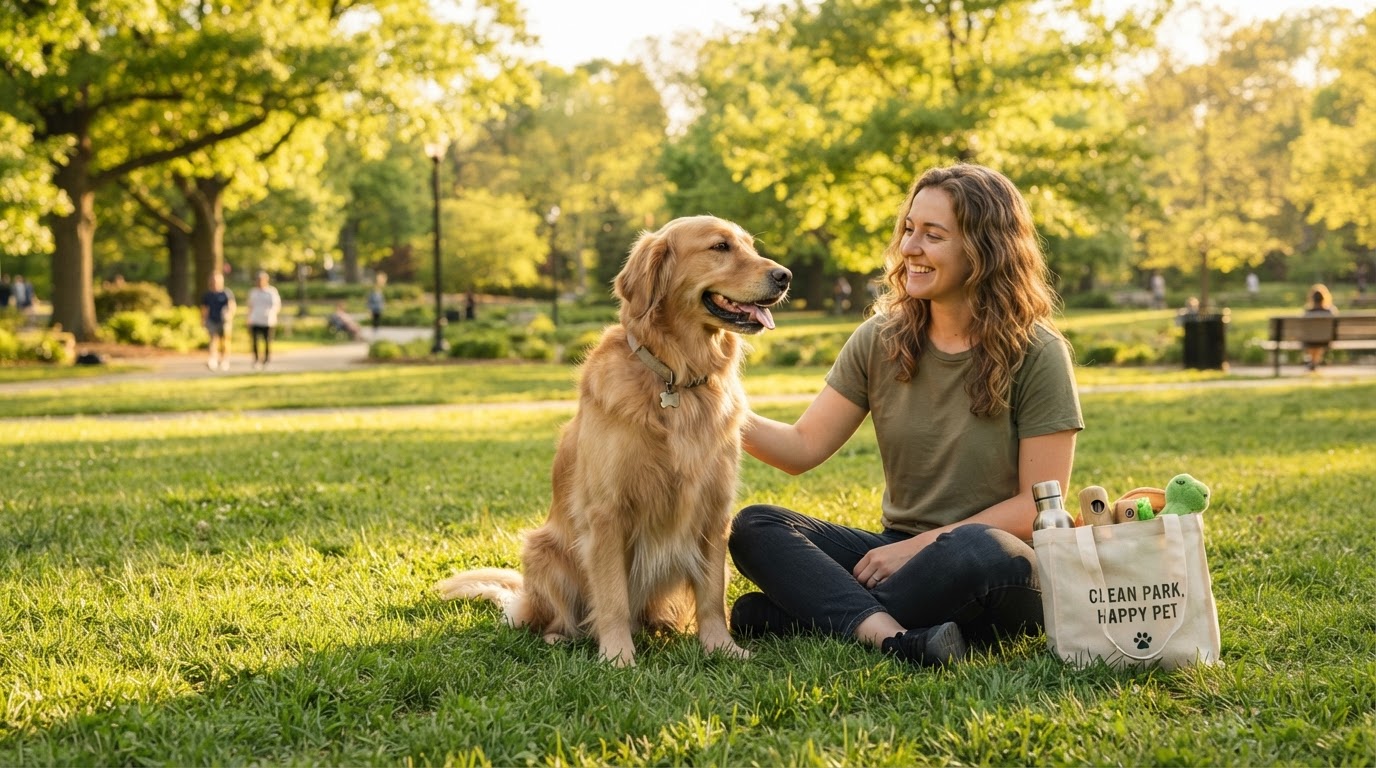
Always carry waste bags during walks, pick up waste promptly from your property, and follow your municipality's disposal requirements. Never place dog waste in a storm drain or leave it near a stream, pond, or drainage area.
Biodegradable or compostable bags do not automatically break down in every landfill or municipal system. Check local requirements before relying on environmental claims printed on the package.
Learn more from the U.S. Environmental Protection Agency.
Protect Your Lawn and Local Waterways
A healthy outdoor space can benefit people and pets, but lawn products must be selected and applied responsibly.
Follow every product label exactly. Store lawn-care materials where pets cannot reach them, avoid overapplication, and prevent products from entering sidewalks, storm drains, streams, or ponds.
Keep dogs away from a treated area for the amount of time stated on the product label or by the licensed professional who performed the service. Do not assume that a product is safe merely because it is described as organic or natural.
If your dog has a health condition, unusual sensitivity, or possible exposure, contact your veterinarian. Questions about a professional lawn treatment should be directed to the company that performed the application.
Responsible lawn care and responsible dog ownership share an important goal: creating outdoor spaces that families, pets, and communities can enjoy safely.
Reduce Food Waste Without Compromising Nutrition
Buy an amount of dog food that your household can store safely and use before it expires. Keep the food sealed according to the manufacturer's instructions and monitor its condition.
Measure portions based on guidance from your veterinarian and the food manufacturer. This can reduce unnecessary waste while helping owners manage their dog's nutritional needs.
Do not select or change a dog's diet solely because a product makes environmental claims. Nutrition must remain the priority. Ask your veterinarian before making a significant dietary change, particularly for puppies, senior dogs, or dogs with medical conditions.
Donate Safe, Usable Supplies
A leash, crate, unopened food package, clean blanket, or other supply that no longer fits your needs may still help another dog.
Before throwing away a usable item, contact a local shelter, rescue organization, foster program, veterinary office, or community pet pantry. Ask what items it currently accepts and whether there are cleaning or packaging requirements.
Do not donate expired food, opened medication, recalled products, damaged equipment, or toys that could present a choking or injury risk.
Thoughtful donation keeps usable materials out of the waste stream while supporting dogs and families in the community.
Make Local Walks Part of Your Routine
Walking from home, when safe and practical, can reduce short vehicle trips while providing exercise and enrichment for your dog.
Local walks also help dog owners become more connected to their neighborhoods. You notice litter, damaged sidewalks, unsafe intersections, missing pet-waste stations, and other conditions that affect both residents and animals.
Choose routes appropriate for your dog's health, age, and tolerance for weather. Bring water when needed, avoid dangerously hot pavement, remain aware of traffic, and obey local leash requirements.
Exercise needs differ between dogs. Your veterinarian can help you determine an appropriate routine.
Maintain Preventive Veterinary Care
Sustainable dog ownership includes maintaining the dog's health throughout its life.
Routine examinations, vaccinations, parasite prevention, dental care, nutrition, exercise, and early attention to emerging health concerns are central parts of responsible ownership.
Preventive care is not simply about avoiding waste. It protects the animal's welfare and may help identify problems before they become more serious.
The American Veterinary Medical Association recommends selecting a pet suited to the household, providing appropriate food and health care, preparing for emergencies, keeping identification current, and committing to the animal for life.
Review the AVMA's responsible pet-ownership guidance.
Keep Identification and Emergency Plans Current
A secure collar, readable identification tag, registered microchip, and current contact information can help reunite a lost dog with its household.
Prepared owners should also maintain:
- Veterinary contact information
- Vaccination and medication records
- Feeding instructions
- Emergency contacts
- A temporary caregiver
- A basic evacuation kit
- A plan for transportation and shelter during an emergency
Preparation protects the dog and can reduce the need for emergency purchases, replacement supplies, or avoidable strain on shelters and community resources.
Green Dog Ownership Is Responsible Dog Ownership
Environmental responsibility should complement good canine care, not compete with it.
A responsible dog owner provides food, water, shelter, veterinary care, training, exercise, companionship, identification, supervision, and a long-term commitment. Green dog ownership adds another question:
How can I meet my dog's needs while also caring for the community and environment we share?
The answer will differ among households. Progress can begin with something as simple as using an existing leash, picking up waste promptly, walking locally, or donating an unused crate.
The Golden Green Foundation's Commitment
Golden Green Foundation is a registered 501(c)(3) companion-dog charity rooted in Eastern Pennsylvania. We are preparing for an anticipated 2027 program launch focused on thoughtful connections between carefully selected Golden Canines and individuals or families who may benefit from companionship, comfort, and hope.
Responsible dog ownership will be central to that mission. A successful companion-dog relationship must support the welfare of both the recipient and the dog.
The Foundation is developing educational resources for dog owners and prospective recipients throughout the United States while building its future program carefully and transparently.
Read What Is a Companion Dog?, consider whether you are ready for a companion dog, or learn more about the Golden Green Foundation's mission.
This article provides general educational information. It is not veterinary, medical, environmental, pesticide, or legal advice. Follow product labels and local regulations, and consult qualified professionals when appropriate.
Golden Green LLC
Your Lawn’s Best Friend — lawn care in Eastern Pennsylvania.
Visit goldengreenlawns.com